Fruit · Fazenda Bulcão, Aimorés, Minas Gerais, Brazil · 1998 to now
Instituto Terra
Lélia and Sebastião Salgado turned a worn-out cattle farm into 608 hectares of Atlantic Forest, now home to 297 native tree species.
608 hectares of Atlantic Forest
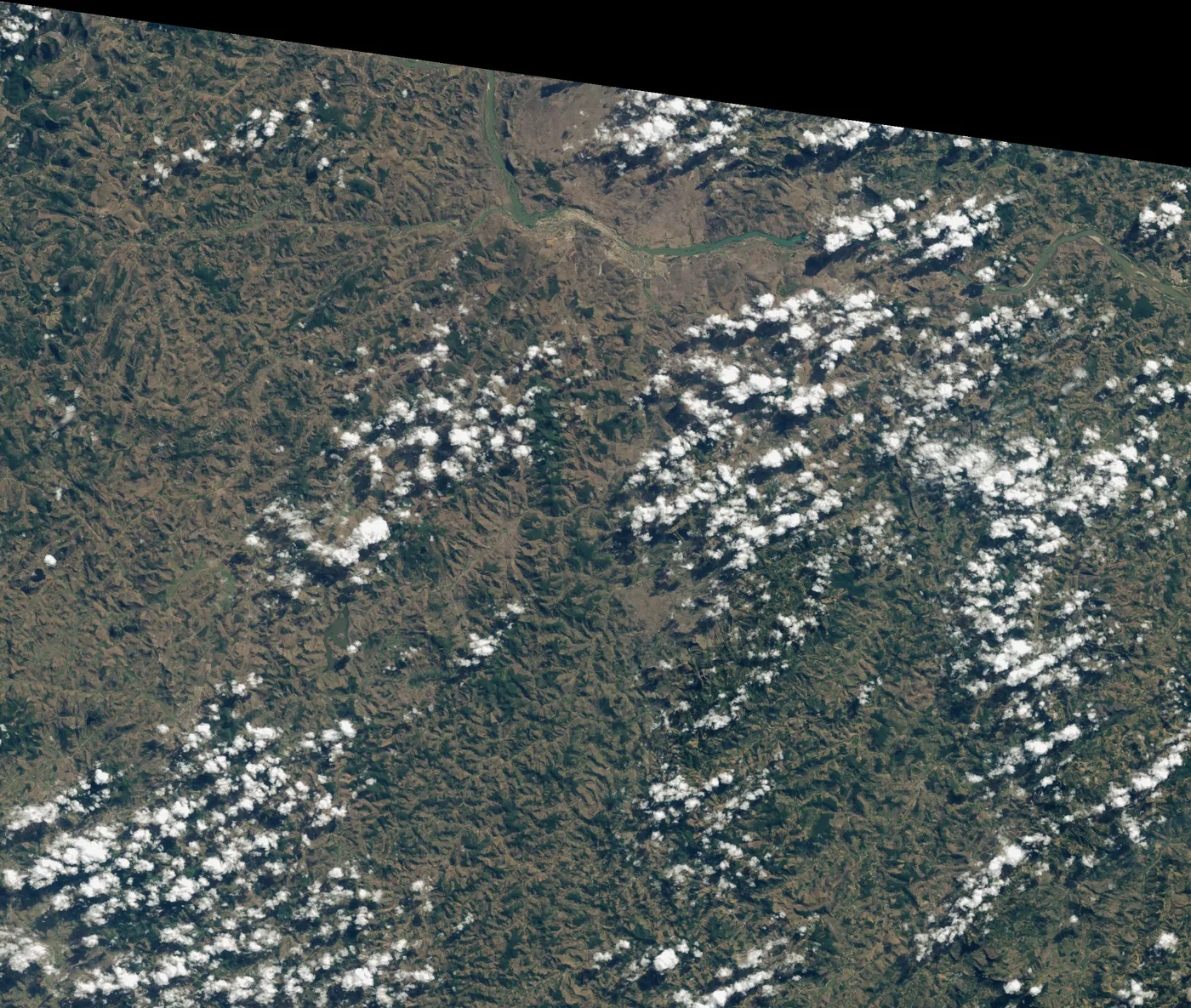
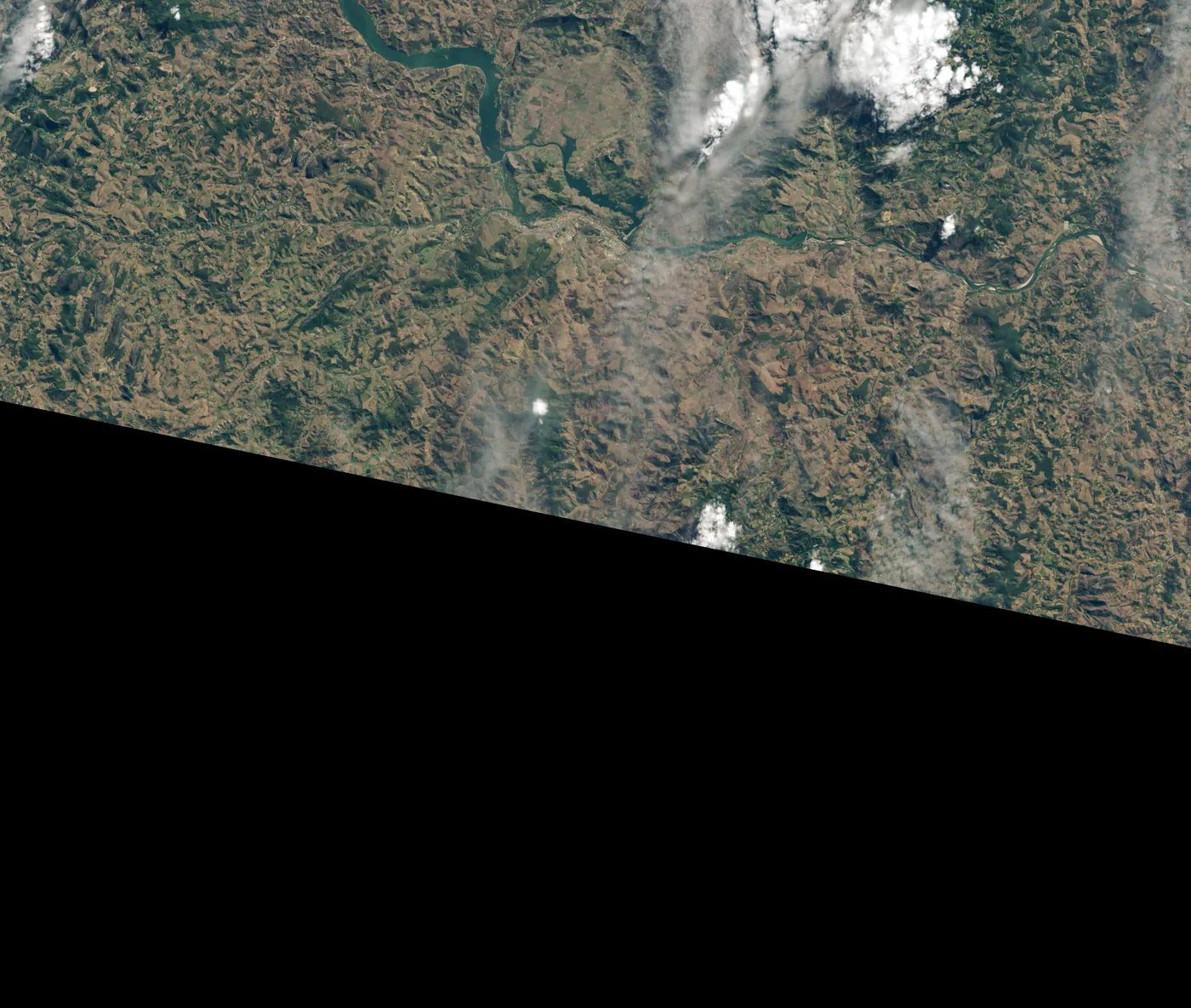
See it change from space
Google Earth Timelapse shows every year since 1984. Press play, and watch the land change.
The story
The Atlantic Forest once stretched for thousands of kilometres along Brazil's coast. Satellite surveys suggest only about 10 to 15 percent of it remains.
In 1994 photographer Sebastião Salgado came home to Aimorés in Minas Gerais after reporting on the genocide in Rwanda. The forests around his childhood home had been cleared for cattle. His wife, Lélia Deluiz Wanick Salgado, proposed planting them back.
They founded Instituto Terra in 1998, and in 1999 students from Aimorés did the first planting. The farm became a private natural heritage reserve. The team planted native seedlings, helped natural regrowth along, and later added more species.
By 2019 the reserve held 297 native tree species, along with birds, mammals, frogs and reptiles that had been missing. Satellite images show a dark green strip of forest where there were brown hills in 2000.
Sebastião Salgado died on 23 May 2025, aged 81. Instituto Terra, now chaired by their son Juliano, carries the work on, growing seedlings, training people and helping restore springs across the Rio Doce valley.
How they did it
- Planted native Atlantic Forest seedlings on eroded hillsides
- Helped natural regrowth along, then added more species to enrich the young forest
- Protected the land as a private natural heritage reserve (RPPN)
- Built a nursery that can grow more than 1 million native seedlings a year
- Ran environmental education and training for local young people and farmers
What changed
- 608 hectares of former cattle pasture restored to forest.[2]
- By 2019: 297 native tree species, 172 bird species, 33 mammal, 15 amphibian and 15 reptile species.[2]
- More than 4 million seedlings planted on the former Bulcão Farm in the first 20 years.[1]
- Several dried-up streams flow again, according to Instituto Terra.[1]
- More than 82,000 people trained, and a nursery able to grow over 1 million native seedlings a year.[2]
- About 3.5 million trees planted in 27 years of work, by Instituto Terra's own count.[3]
Who did it
Lélia Deluiz Wanick Salgado and Sebastião Salgado founded Instituto Terra; their son Juliano Ribeiro Salgado now chairs it. Local students did the first planting, and the institute's staff, nursery workers and Rio Doce valley farmers carry the work on.
Worth knowing
It is a small area. NASA notes the reforested strip covers only a few hillsides and stream valleys, about 7 km².
Tree counts differ between sources and years (from about 2.5 million to more than 4 million), partly because some counts include planting beyond the farm.
What we can take from it
- One family's land can become a living seed bank and school for a whole valley.
- A nursery and training programme let the work spread well beyond the first farm.
- Forest brings water back: protecting springs became a regional programme.
Sources
- 1.A New Patch of Green in Brazil · NASA Earth Observatory · Satellite
- 2.Instituto Terra: restoring the Atlantic Forest (case study, Restor and Chazdon 2021) · FAO Sustainable Forest Management Toolbox · Report
- 3.Instituto Terra home page · Instituto Terra · Official
- 4.A life that continues to sow the future · Instituto Terra · Official
- 5.Renowned Brazilian photographer Sebastião Salgado dies at age 81 · PBS NewsHour (AP) · Story
- 6.From barren land to thriving forest: the story of photographer Sebastião Salgado's Instituto Terra in Brazil · Global Voices · Story
More places brought back
Shaanxi, Shanxi, Gansu and Inner Mongolia, China · 1994 to 2005 (and since)
Loess Plateau
about 35,000 km² in two World Bank projects
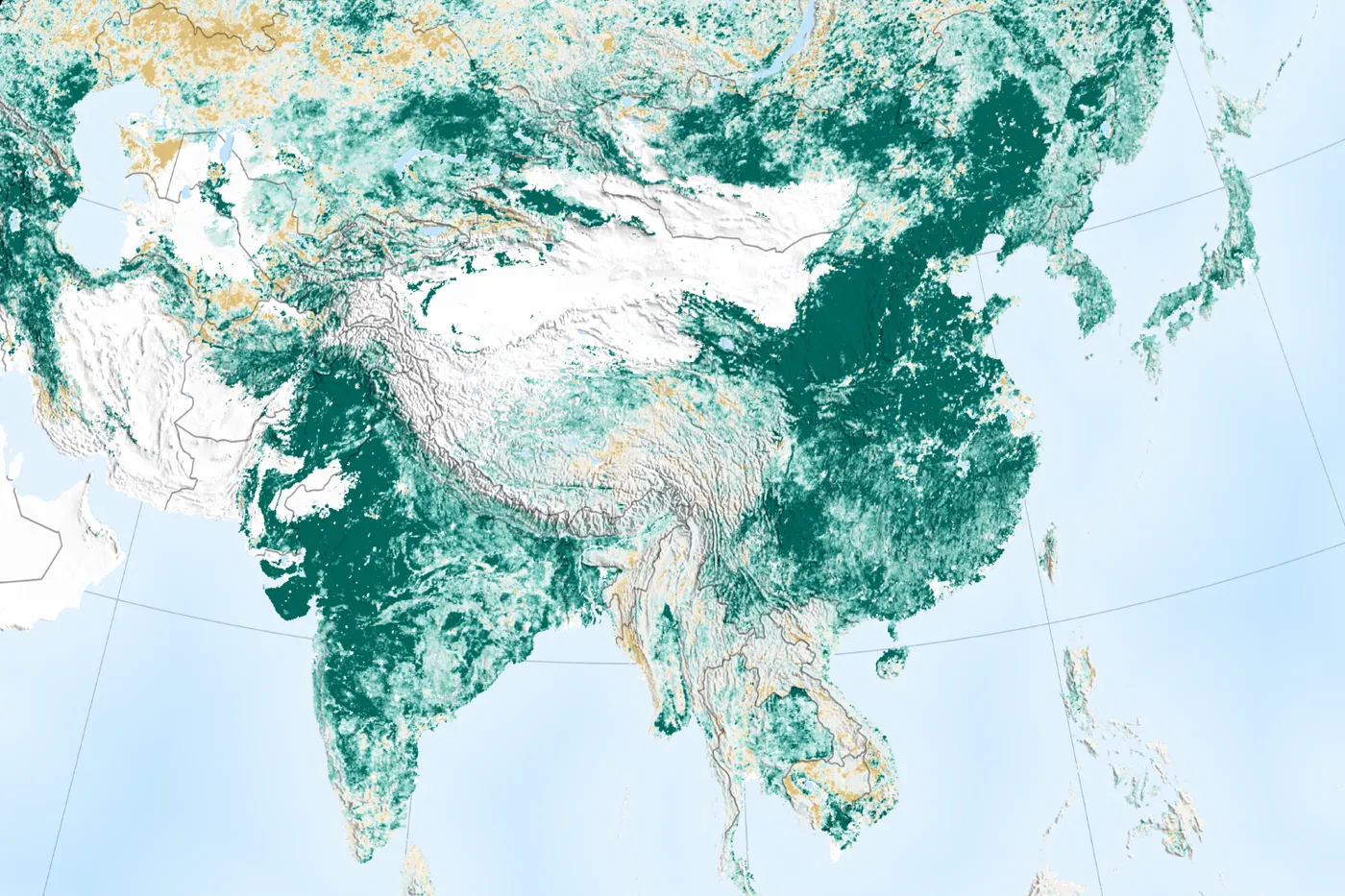
The Loess Plateau had one of the highest erosion rates in the world. From 1994, farming families built terraces and small dams, stopped free grazing and replanted the slopes. Vegetation cover doubled, incomes doubled and the Yellow River carries far less soil.
Maradi and Zinder regions, southern Niger · 1983 to now
Niger's farmer-managed regreening
about 5 million hectares
After the droughts of the 1970s and 1980s, southern Niger's farmland was nearly bare. Farmers began protecting the shoots of living tree stumps in their fields. The trees came back across millions of hectares, at very low cost.
Tigray, northern Ethiopia · 1991 to 2020
Tigray
more than 1 million hectares
After famine and war in the 1980s, Tigray's communities spent about 30 years terracing hills, building check dams and closing worn-out land to grazing. Groundwater came back, irrigation grew from about 40 to almost 40,000 hectares, and the region won a UN-backed gold award in 2017. The 2020 to 2022 war took a terrible toll on people and on this work.